We implement. We transfer. You take control.
Engineering services are at the core of Cavity Eye. Our dedicated team provides fast, agile and customer-focused support in English and German, working directly with your local specialists throughout implementation.
Through close cooperation, we reduce technical risk and help avoid unnecessary investment. We do not aim to create dependence. We transfer the practical knowledge behind every solution so your team can use the technology confidently and manage the process independently.
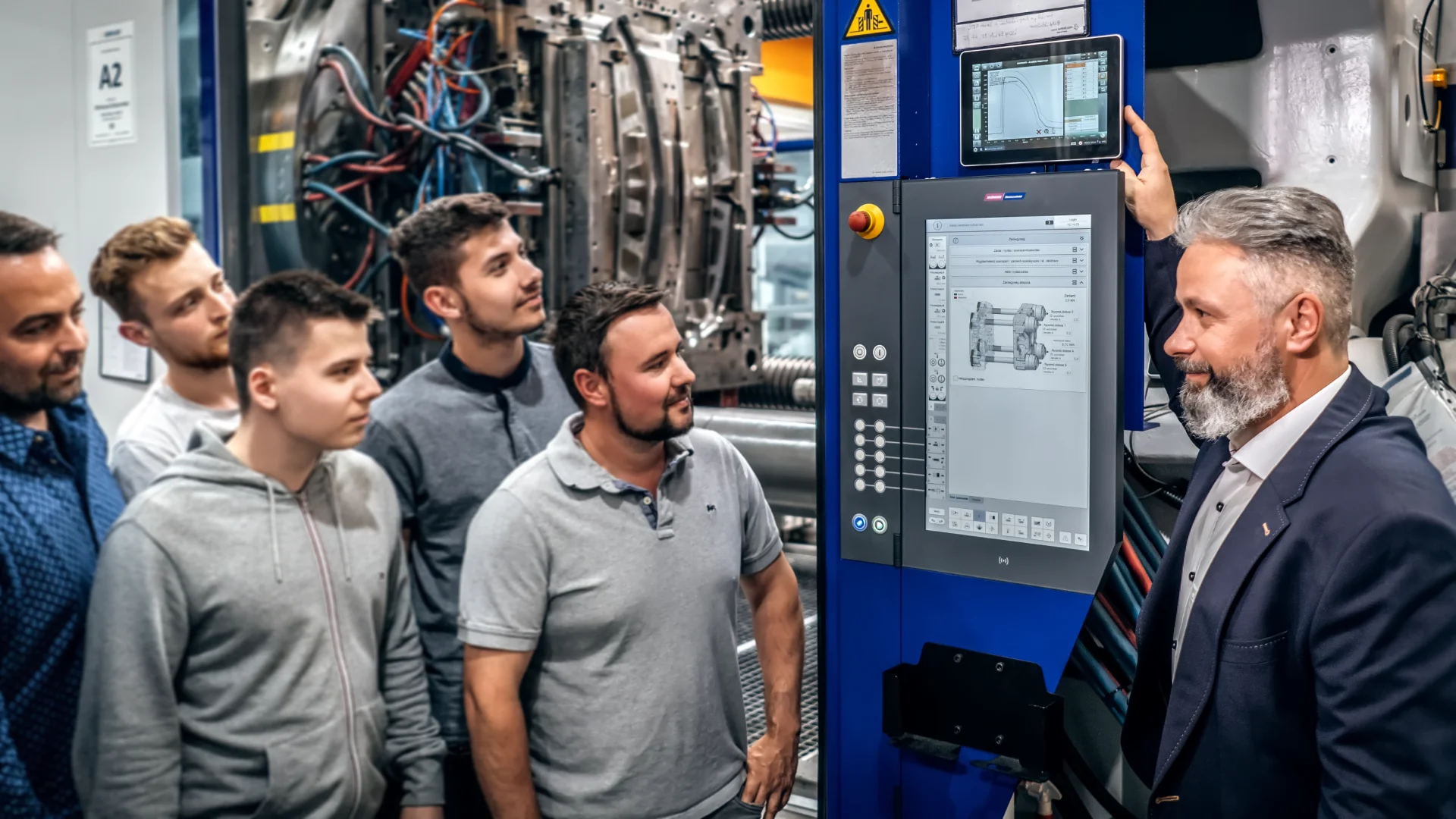
A Team Built for Implementation
Every implementation brings together the expertise required for the application. Our specialists cover sensor integration, measurement technology, molding-process development, maintenance and practical knowledge transfer — so the customer receives the right support at every stage.
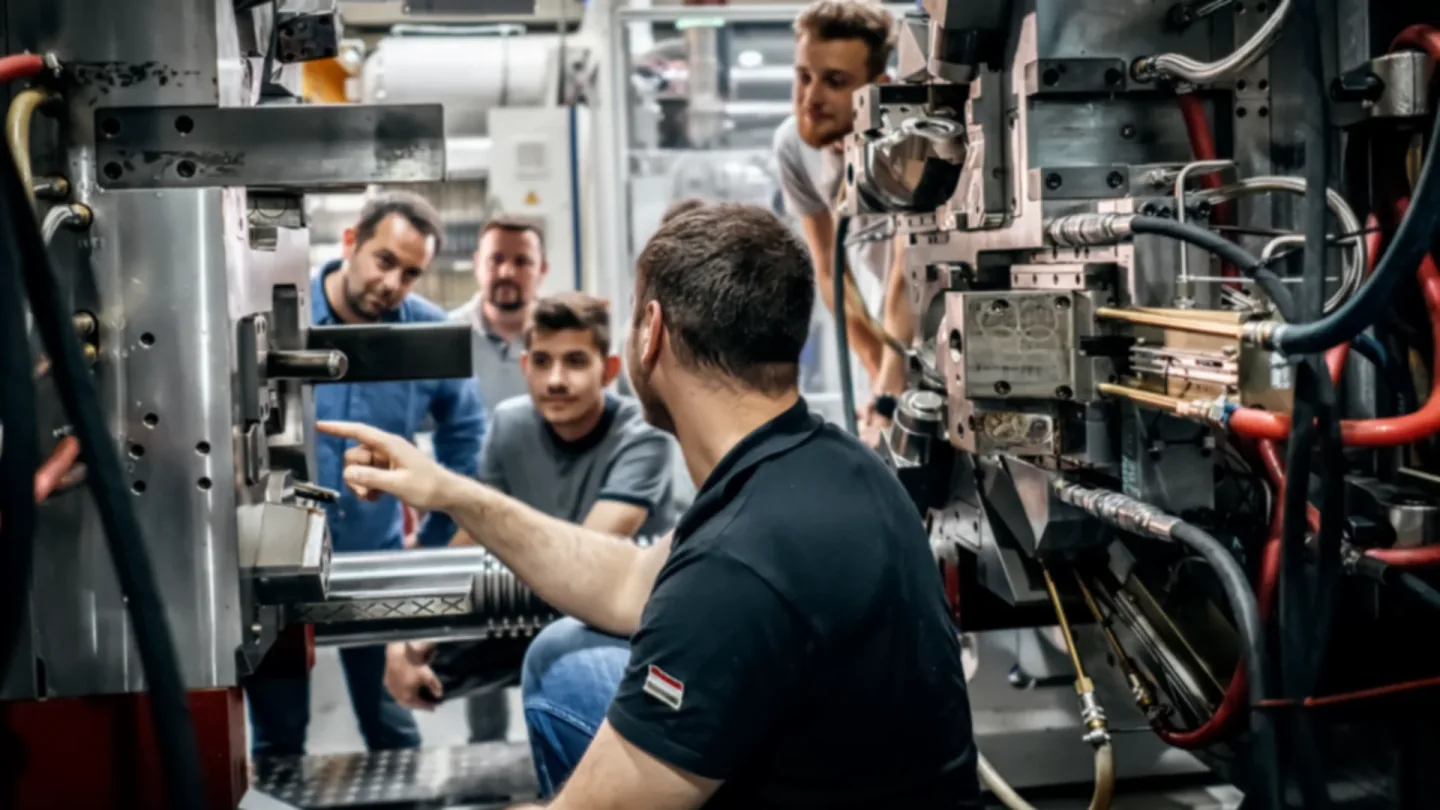
The Solution Should Stay After We Leave
We work alongside setters, technologists and engineers, explaining the reasoning behind each decision and adjustment. The objective is not only to solve the current application, but to enable the local team to recognize, analyze and manage similar situations independently in the future.
You decide how far we continue together. Once the system and methodology are understood, your team can proceed independently — or involve our specialists whenever additional support creates value.
One Challenge. Four Connected Paths.
A production challenge may require technology, implementation support, broader professional development — or a combination of all three. Each Cavity Eye page shows one part of the same connected approach.
From an Existing Mold to Independent Process Control
Cavity Eye coordinates the complete technical handover — from the first sensor-integration discussion to measurement, process application and follow-up. Each step is aligned with the customer's local specialists to keep implementation efficient and predictable.
Make the Existing Mold Sensor-Ready
Our engineers work directly with your mold designer to define the modifications required to integrate sensors into your existing mold. In many cases, the key technical decisions can be clarified during a focused online engineering consultation, reducing lead time and avoiding unnecessary modification work.
Remote consultation availableInstall the Sensors and Complete the Dry Test
After installation, every measuring point and the complete sensor configuration are verified through a structured dry test before the mold enters production. This confirms correct operation and reduces implementation risk before the first molding cycle.
Install the Measurement System
Cavity Eye measurement equipment can be installed on virtually any injection molding machine — from older hydraulic equipment to the latest generation of molding machines. Depending on the machine type and size, installation typically takes between one and four hours.
Before implementation, our engineers coordinate the technical details with the customer's local specialists so the mold, sensors and measurement equipment form one seamless system.
Older hydraulic to latest-generation molding machinesThe Curves Are Visible. What Comes Next?
A functioning sensor system is only the beginning. Measurement data creates value when the local team understands what the cavity-pressure curves reveal and how they can be translated into better process decisions.
Our goal is to prevent the technology from becoming another box beside the machine — installed, but rarely used.
At this point, the customer can continue independently. If further support is useful, our engineers continue with application-specific implementation and practical knowledge transfer.
Turn the Curves into Process Decisions
First, we make sure the local team can operate the cavity-pressure system confidently. The customer's specialists then establish their base process according to their normal working method. Together, we evaluate the Cavity Eye curves and use the measured behavior to fine-tune the molding process.
This approach helps setters and technologists understand how the measurement system simplifies their work and supports faster, more objective decisions in everyday production.
Before further optimization, the behavior of the individual cavities must be understood and balanced. We demonstrate the method on cold-runner, hot-runner and combined runner systems. Until cavity balance is clarified, further process optimization cannot be evaluated reliably.
Once cavity balance is understood, curve-guided fine-tuning can include:
Independent Use and Three-Month Follow-Up
We explain the reasoning behind each adjustment — not only which parameter should change, but why the measured behavior supports that decision. Once the methodology has been transferred, the customer's team can continue independently and apply the same thinking to future situations.
For the following three months, our engineers remain available for questions and new situations that arise during everyday use, supporting a confident transition into independent application.
Industrial Durability, Warranty and Maintenance
Sensors and system components are selected and integrated for demanding industrial conditions. Structured testing, defined warranty conditions, maintenance and technical support help protect the implementation throughout the system lifecycle.
Individual Services
Every implementation draws on the specific services below — combined as your application requires.
Preparation phase of designing and sensor installation.
Sensor Position Recommendation
Start with measurement points selected for your project goals.
We review your mold model to recommend sensor locations, assess installation feasibility and identify the required components.
Discuss this serviceSensor Position 3D Design
Turn the recommended sensor positions into a mold design ready for machining.
We integrate the necessary modifications and components into your existing 3D model and provide supporting machining documentation.
Discuss this serviceSensor Pre-wiring
Reduce installation time with sensors pre-wired to the SMS socket before delivery.
We prepare the cables, configure the mold memory and test the assembly to simplify setup at your facility.
Discuss this serviceWeekly Follow-up Support
For pilot projects, during the 3–6 month follow-up period, we provide weekly online support and data analysis to help the customer evaluate production data, identify deviations, and define the necessary improvement actions.
Explore the Pilot ProjectBring measurement technology and practical expertise directly to your production floor.
On-site Engineering Support
Get hands-on support for sensor commissioning and measurement system installation.
We check the prepared mold, connect the required hardware and verify signals and system operation.
Discuss this serviceApplication and Technology Workshop
Help your team understand the measurement system and the relationship between molding parameters and cavity pressure curves.
The workshop combines theory with practical demonstrations when a suitable production setup is available.
Discuss this serviceSensor Installation Workshop
Build your tooling and maintenance team’s confidence in sensor commissioning.
We combine theoretical instruction with a joint commissioning exercise or a demonstration on an instrumented mold.
Discuss this serviceSensor Position Design Workshop
Give your mold designers the knowledge to integrate Cavity Eye sensors into their designs.
We cover sensor placement, cable routing and component integration, supported by design models and reference materials.
Discuss this serviceFocused support for your specific molding challenges.
Molding Troubleshooting
Address a specific production problem with a targeted, measurement-based investigation.
On-site observations to identify contributing factors and recommend corrective actions by our molding and tooling expert team.
Discuss this serviceStart with One Application. Prove the Value Before Expanding.
A pilot project applies the Cavity Eye approach to a selected mold, product or production challenge. Together, we define the objective, establish measurable success criteria, implement the required technology and evaluate the technical and business results.
This allows manufacturers to validate the potential of the solution while minimizing implementation risk and initial investment.